Website Design Copyright 2026 © K and K
All Rights Reserved. web design by awakening design
Brand classification
Breakthrough In Color Fixation Dyeing Technology: KolorLink Revolutionizes Color Fastness In Sportswear
In the modern sportswear industry, color fastness has always been one of the most important concerns for manufacturers and consumers. Sportswear must not only withstand sweat and sunlight but also maintain vibrant colors to showcase brand value. However, traditional color fixation technologies often struggle to fully meet market demands when facing these challenges.
Against this backdrop, KolorLink technology emerged. This innovative color fixation dyeing technology by K and K utilizes a unique molecular bonding method, completely transforming the color fastness performance of sportswear, especially achieving breakthroughs in nylon applications.
The core advantage of KolorLink technology lies in its innovative molecular bonding solution. This breakthrough technology acts like a strong "molecular bridge" between fabric and dye, creating a unique three-dimensional network structure that achieves unprecedented bonding strength.
This molecular-level innovation not only greatly enhances color fastness but also overcomes the limitations of traditional fixation techniques. It achieves exceptional fixation performance without using harmful substances such as Perfluorinated Compounds (PFAS), Phenols, Formaldehyde, or Bisphenols.
Especially in high-performance applications like sportswear, KolorLink demonstrates outstanding wash resistance, abrasion resistance, and lightfastness, achieving a dual breakthrough in environmental sustainability and performance excellence.
Based on actual test data, KolorLink demonstrates significant advantages compared to traditional fixatives :
|
|
|
|
|
|
Limited wash, light, and abrasion fastness, |
Outstanding performance in wash, light, and abrasion fastness, |
|
|
|
Uses formaldehyde-free or low-formaldehyde formulas, compliant with OEKO-TEX and REACH standards, and environmentally friendly—free from PFAS, phenols, formaldehyde, and bisphenols |
|
|
|
Achieves high precision in color expression, |
|
|
|
Achieves superior fastness in a single treatment, |
|
|
|
|
|
|
|
|
In the sportswear industry, nylon fiber is highly favored for its excellent mechanical properties and comfort. However, achieving strong dye fixation on this synthetic fiber has long been a technical challenge. KolorLink technology overcomes this issue with an innovative molecular bonding mechanism:
Special nolecular design ensures high-efficiency bonding with nylon fibers
Forms a stable three-dimensional network structure
Increases dye stability within the fiber
Reduces dye migration and fading
The KolorLink technology achieves top-tier international environmental standards:
Compliant with bluesign® & OEKO-TEX® Standard 100 certifications
Meets REACH regulatory requirements
Formaldehyde-free formula
Free from harmful substances such as PFAS and Bisphenols
Collaboration with a leading global yoga brand demonstrates the outstanding advantages of KolorLink technology :

As the fashion industry faces unprecedented transformation amid global sustainability trends, kolorlink technology emerges not only as a breakthrough in dyeing but also as a key solution for sustainable fashion. Through its revolutionary molecular bonding technology, kolorlink delivers significant environmental benefits, achieving major industry breakthroughs in four key areas :
Optimized resource efficiency
At the production level, kolorlink technology drastically reduces resource consumption. Traditional dyeing processes often require multiple treatments to achieve desired color fixation, whereas kolorlink's high-efficiency molecular bonding mechanism enables superior color fixation in a single process. This not only lowers energy consumption but also significantly reduces water usage, offering a practical solution for sustainable industry development.
At the consumer level, kolorlink delivers even more significant innovations. By enhancing fabric durability, particularly in color fastness, it effectively prevents premature disposal of garments due to fading. This provides consumers with longer-lasting wear while fundamentally reducing the frequency of textile waste, making a crucial contribution to mitigating the environmental impact of fast fashion.
KolorLink technology demonstrates how technological innovation can provide practical solutions for sustainable fashion. By minimizing resource waste and extending product lifespan, it not only creates commercial value but also makes a positive environmental impact, setting a new benchmark for the fashion industry’s sustainable transition.
With its strong market potential, kolorlink technology is expected to gain wider adoption in the following sectors :
Premium sportswear
Outdoor performance gear (hiking, running, cycling, swimming)
Fashion & casual wear
Professional sports equipment
Workwear & engineering apparel
One of the key advantages of KolorLink technology is its superior process adaptability.
pH versatility – effective in neutral conditions and alkaline environments, offering flexibility for various dyeing requirements.
Temperature adaptability – works efficiently across a wide range of temperatures, from room-temperature processing to high-temperature fixation, allowing greater process flexibility.
KolorLink overcomes the limitations of traditional fixatives by providing exceptional dye compatibility. It works effectively with:
Reactive dyes
Acid dyes
Disperse dyes
Specialty dyes
This universal compatibility simplifies process planning for dyeing factories and enhances production efficiency.
This broad fiber compatibility provides greater innovation opportunities for product development.
These additional functional advantages not only enhance product value but also deliver a premium experience for end consumers.
Different brands have varying requirements for fabric color fastness testing, but most follow international standards to evaluate durability and quality.
AATCC (American Association of Textile Chemists and Colorists)
ISO (International Organization for Standardization)
JIS (Japanese Industrial Standards)
CNS (Taiwan National Standards)
Although testing methods may vary, their core purpose is to simulate real-world conditions, assessing how fabric responds to wear and washing.
During testing, experts evaluate fading levels and color transfer resistance, often using multifiber test strips to ensure that the product meets market expectations.
Before dyeing, brands define their color fastness expectations.
After dyeing, suppliers confirm whether the fabric meets the required standards.
This ensures that the final product complies with industry regulations and delivers long-lasting performance.
Product testing
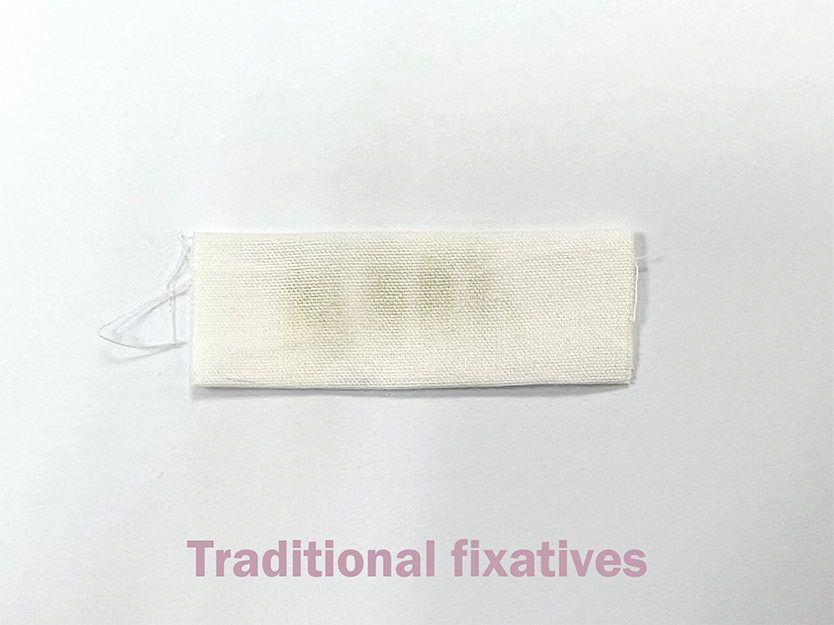
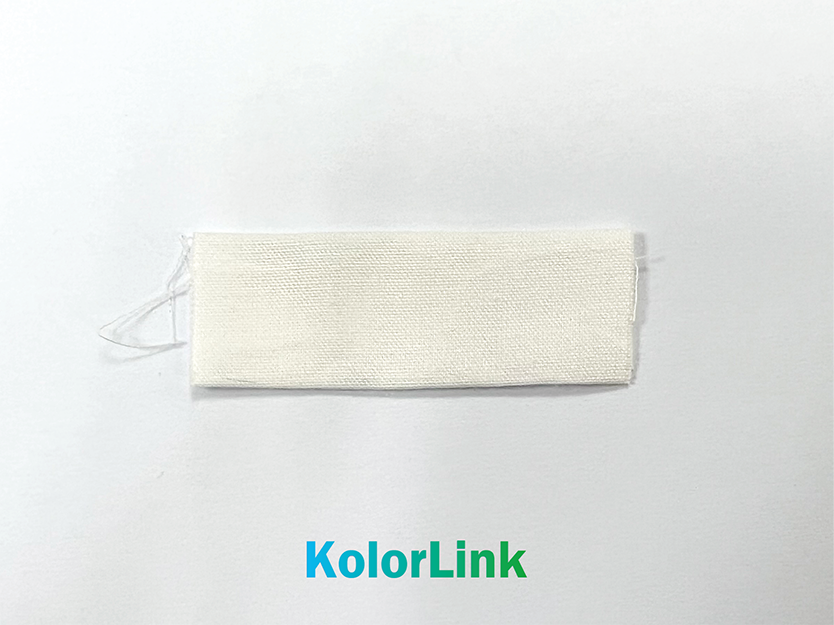
Color transfer – Traditional fixatives vs. KolorLink
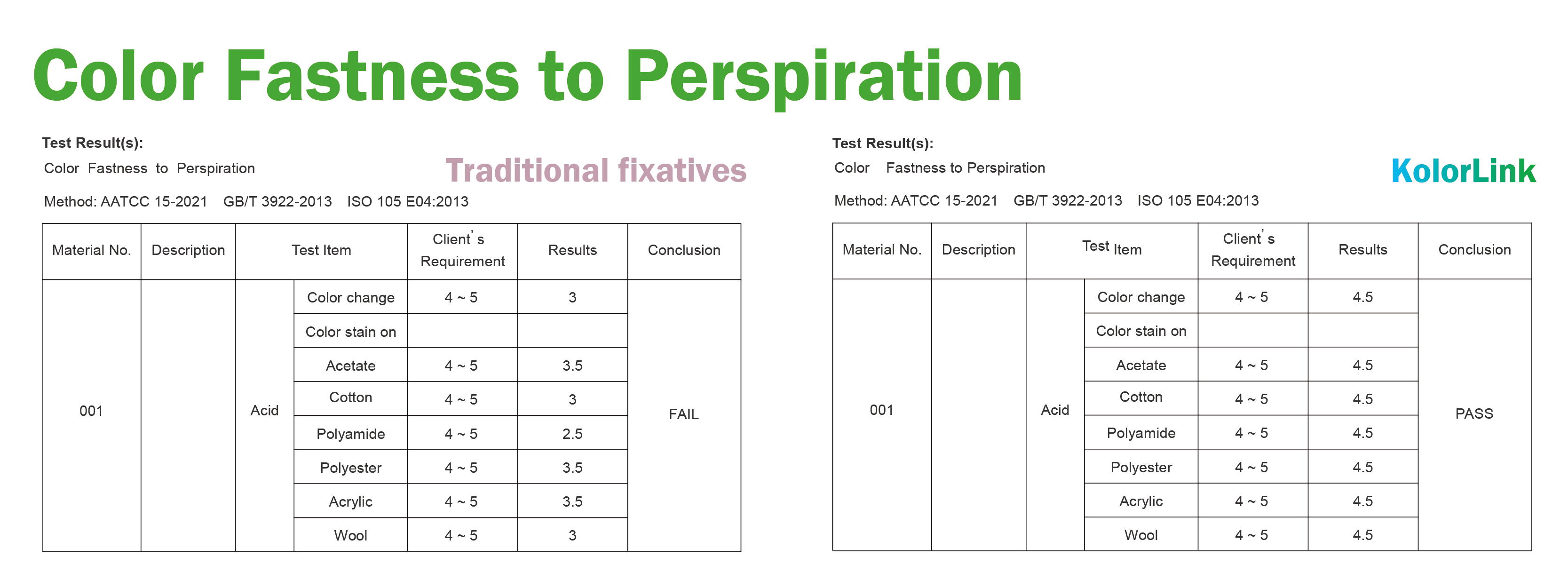
KolorLink technology demonstrates superior performance in color fastness against washing and sweat.
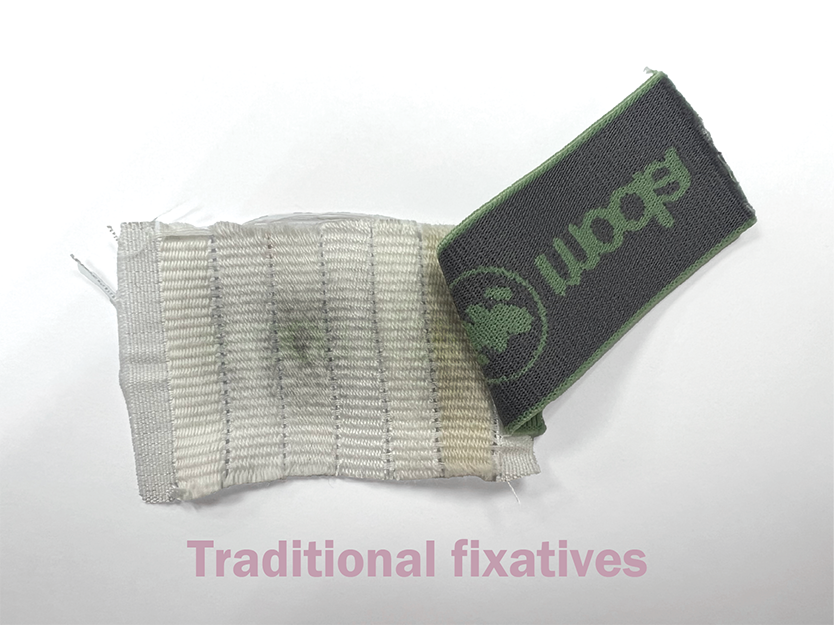
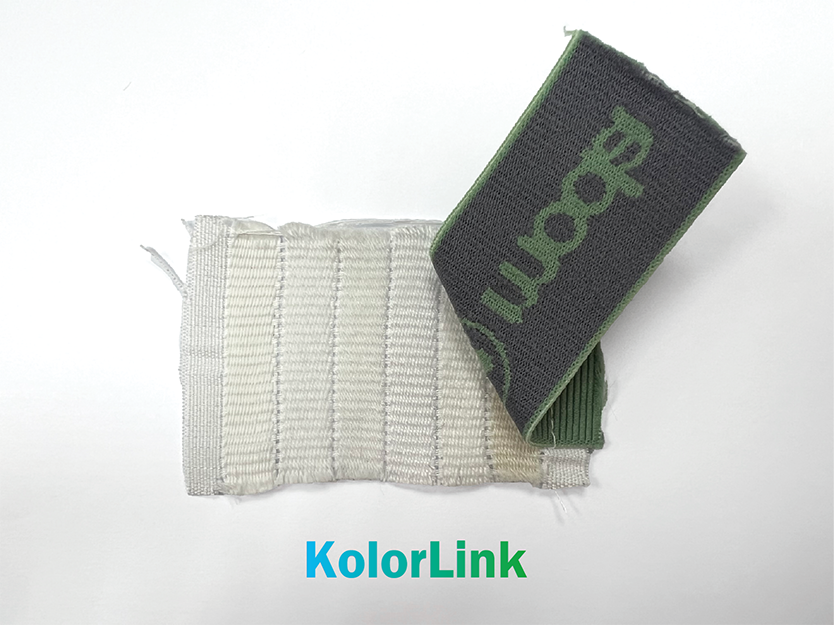
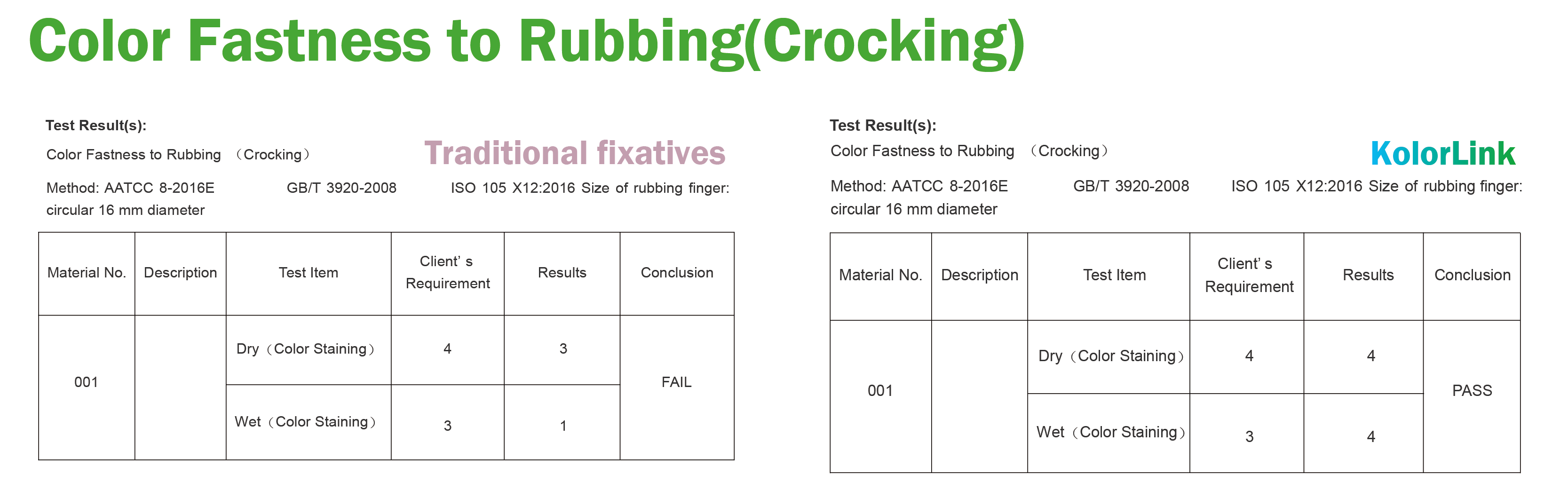
KolorLink technology demonstrates superior performance in color fastness against dry rubbing.
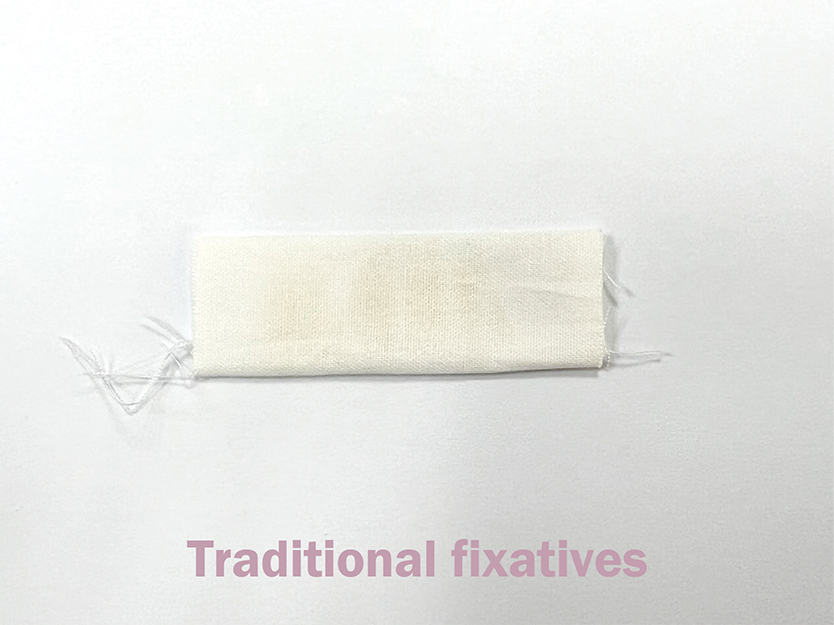
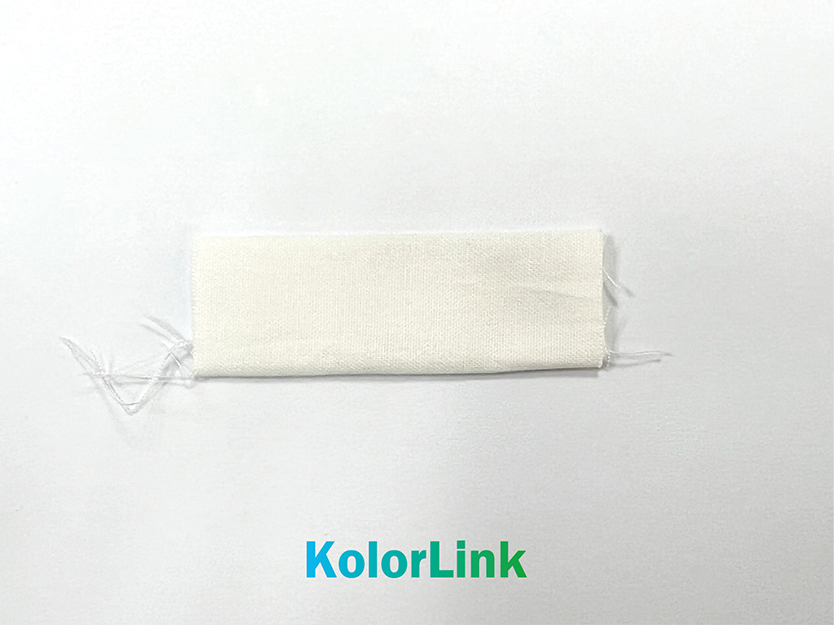
KolorLink technology demonstrates superior performance in color fastness against wet rubbing.
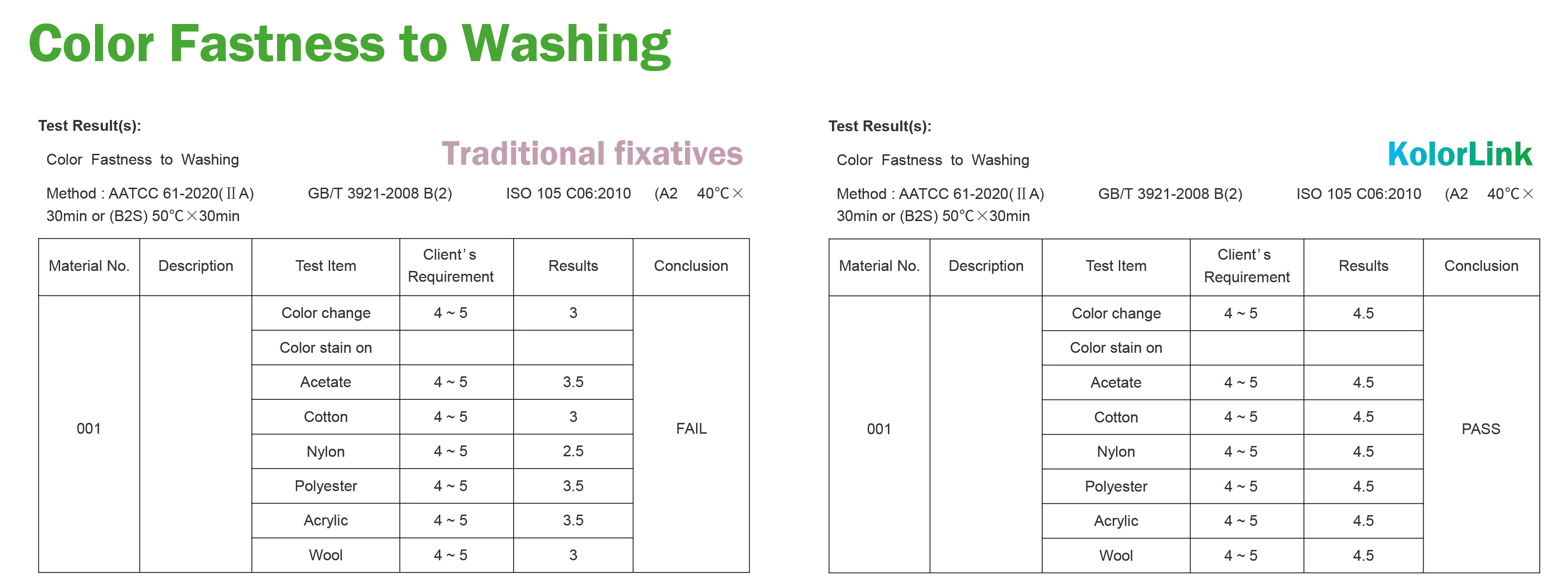
Through innovative molecular bonding technology, KolorLink has achieved a major breakthrough in the field of color fixation dyeing, particularly revolutionizing the sportswear industry. It not only meets modern consumers’ dual demands for quality and sustainability but also paves the way for a more sustainable textile industry.
Moving forward,KolorLink will continue to advance in two key areas: intelligent applications & environmental sustainability :
Development of adaptive color fixation systems – Enhancing efficiency and performance
Integration of digital monitoring technology – Enabling real-time process optimization
Research & development of Eco-Friendly raw materials – Promoting a greener supply chain
These innovations will inject new momentum into the textile industry, driving it toward greater efficiency, sustainability, and market competitiveness.
In the modern sportswear industry, color fastness has always been one of the most important concerns for manufacturers and consumers. Sportswear must not only withstand sweat and sunlight but also maintain vibrant colors to showcase brand value. However, traditional color fixation technologies often struggle to fully meet market demands when facing these challenges.
Against this backdrop, KolorLink technology emerged. This innovative color fixation dyeing technology by K and K utilizes a unique molecular bonding method, completely transforming the color fastness performance of sportswear, especially achieving breakthroughs in nylon applications.
The core advantage of KolorLink technology lies in its innovative molecular bonding solution. This breakthrough technology acts like a strong "molecular bridge" between fabric and dye, creating a unique three-dimensional network structure that achieves unprecedented bonding strength.
This molecular-level innovation not only greatly enhances color fastness but also overcomes the limitations of traditional fixation techniques. It achieves exceptional fixation performance without using harmful substances such as Perfluorinated Compounds (PFAS), Phenols, Formaldehyde, or Bisphenols.
Especially in high-performance applications like sportswear, KolorLink demonstrates outstanding wash resistance, abrasion resistance, and lightfastness, achieving a dual breakthrough in environmental sustainability and performance excellence.
Based on actual test data, KolorLink demonstrates significant advantages compared to traditional fixatives :
|
|
|
|
|
|
Limited wash, light, and abrasion fastness, |
Outstanding performance in wash, light, and abrasion fastness, |
|
|
|
Uses formaldehyde-free or low-formaldehyde formulas, compliant with OEKO-TEX and REACH standards, and environmentally friendly—free from PFAS, phenols, formaldehyde, and bisphenols |
|
|
|
Achieves high precision in color expression, |
|
|
|
Achieves superior fastness in a single treatment, |
|
|
|
|
|
|
|
|
In the sportswear industry, nylon fiber is highly favored for its excellent mechanical properties and comfort. However, achieving strong dye fixation on this synthetic fiber has long been a technical challenge. KolorLink technology overcomes this issue with an innovative molecular bonding mechanism:
Special nolecular design ensures high-efficiency bonding with nylon fibers
Forms a stable three-dimensional network structure
Increases dye stability within the fiber
Reduces dye migration and fading
The KolorLink technology achieves top-tier international environmental standards:
Compliant with bluesign® & OEKO-TEX® Standard 100 certifications
Meets REACH regulatory requirements
Formaldehyde-free formula
Free from harmful substances such as PFAS and Bisphenols
Collaboration with a leading global yoga brand demonstrates the outstanding advantages of KolorLink technology :
As the fashion industry faces unprecedented transformation amid global sustainability trends, kolorlink technology emerges not only as a breakthrough in dyeing but also as a key solution for sustainable fashion. Through its revolutionary molecular bonding technology, kolorlink delivers significant environmental benefits, achieving major industry breakthroughs in four key areas :
Optimized resource efficiency
At the production level, kolorlink technology drastically reduces resource consumption. Traditional dyeing processes often require multiple treatments to achieve desired color fixation, whereas kolorlink's high-efficiency molecular bonding mechanism enables superior color fixation in a single process. This not only lowers energy consumption but also significantly reduces water usage, offering a practical solution for sustainable industry development.
At the consumer level, kolorlink delivers even more significant innovations. By enhancing fabric durability, particularly in color fastness, it effectively prevents premature disposal of garments due to fading. This provides consumers with longer-lasting wear while fundamentally reducing the frequency of textile waste, making a crucial contribution to mitigating the environmental impact of fast fashion.
KolorLink technology demonstrates how technological innovation can provide practical solutions for sustainable fashion. By minimizing resource waste and extending product lifespan, it not only creates commercial value but also makes a positive environmental impact, setting a new benchmark for the fashion industry’s sustainable transition.
With its strong market potential, kolorlink technology is expected to gain wider adoption in the following sectors :
Premium sportswear
Outdoor performance gear (hiking, running, cycling, swimming)
Fashion & casual wear
Professional sports equipment
Workwear & engineering apparel
One of the key advantages of KolorLink technology is its superior process adaptability.
pH versatility – effective in neutral conditions and alkaline environments, offering flexibility for various dyeing requirements.
Temperature adaptability – works efficiently across a wide range of temperatures, from room-temperature processing to high-temperature fixation, allowing greater process flexibility.
KolorLink overcomes the limitations of traditional fixatives by providing exceptional dye compatibility. It works effectively with:
Reactive dyes
Acid dyes
Disperse dyes
Specialty dyes
This universal compatibility simplifies process planning for dyeing factories and enhances production efficiency.
This broad fiber compatibility provides greater innovation opportunities for product development.
These additional functional advantages not only enhance product value but also deliver a premium experience for end consumers.
Different brands have varying requirements for fabric color fastness testing, but most follow international standards to evaluate durability and quality.
AATCC (American Association of Textile Chemists and Colorists)
ISO (International Organization for Standardization)
JIS (Japanese Industrial Standards)
CNS (Taiwan National Standards)
Although testing methods may vary, their core purpose is to simulate real-world conditions, assessing how fabric responds to wear and washing.
During testing, experts evaluate fading levels and color transfer resistance, often using multifiber test strips to ensure that the product meets market expectations.
Before dyeing, brands define their color fastness expectations.
After dyeing, suppliers confirm whether the fabric meets the required standards.
This ensures that the final product complies with industry regulations and delivers long-lasting performance.
Product testing
Color transfer – Traditional fixatives vs. KolorLink
KolorLink technology demonstrates superior performance in color fastness against washing and sweat.
KolorLink technology demonstrates superior performance in color fastness against dry rubbing.
KolorLink technology demonstrates superior performance in color fastness against wet rubbing.
Through innovative molecular bonding technology, KolorLink has achieved a major breakthrough in the field of color fixation dyeing, particularly revolutionizing the sportswear industry. It not only meets modern consumers’ dual demands for quality and sustainability but also paves the way for a more sustainable textile industry.
Moving forward,KolorLink will continue to advance in two key areas: intelligent applications & environmental sustainability :
Development of adaptive color fixation systems – Enhancing efficiency and performance
Integration of digital monitoring technology – Enabling real-time process optimization
Research & development of Eco-Friendly raw materials – Promoting a greener supply chain
These innovations will inject new momentum into the textile industry, driving it toward greater efficiency, sustainability, and market competitiveness.
In compliance with EU personal data protection laws, we are committed to protecting and providing you with control over your personal data. By clicking "Accept All", you allow us to place cookies to enhance your experience on this site, help us analyze site performance and usage, and enable us to deliver relevant marketing content. You can manage your cookie settings below. By clicking "Agree" you agree to the current settings. For more information, please visit the Privacy Statement.
This website uses cookies
In compliance with EU personal data protection laws, we are committed to protecting your personal data and providing you with control over it. By clicking "Agree", you allow us to place cookies to improve your experience on this site, help us analyze site performance and usage, and allow us to deliver relevant marketing content.
By clicking "Only necessary" you allow us to place only necessary cookies. The website cannot function without these cookies and you cannot switch them off on your system. These cookies are typically set only in response to an action you perform (i.e. a service request), such as setting privacy preferences, logging in, or filling in a form. You can set your browser to block or prompt you for these cookies, but this may prevent some site features from working.